Exploring Kaymakli Underground City: A Journey into Cappadocia’s Subterranean Marvel
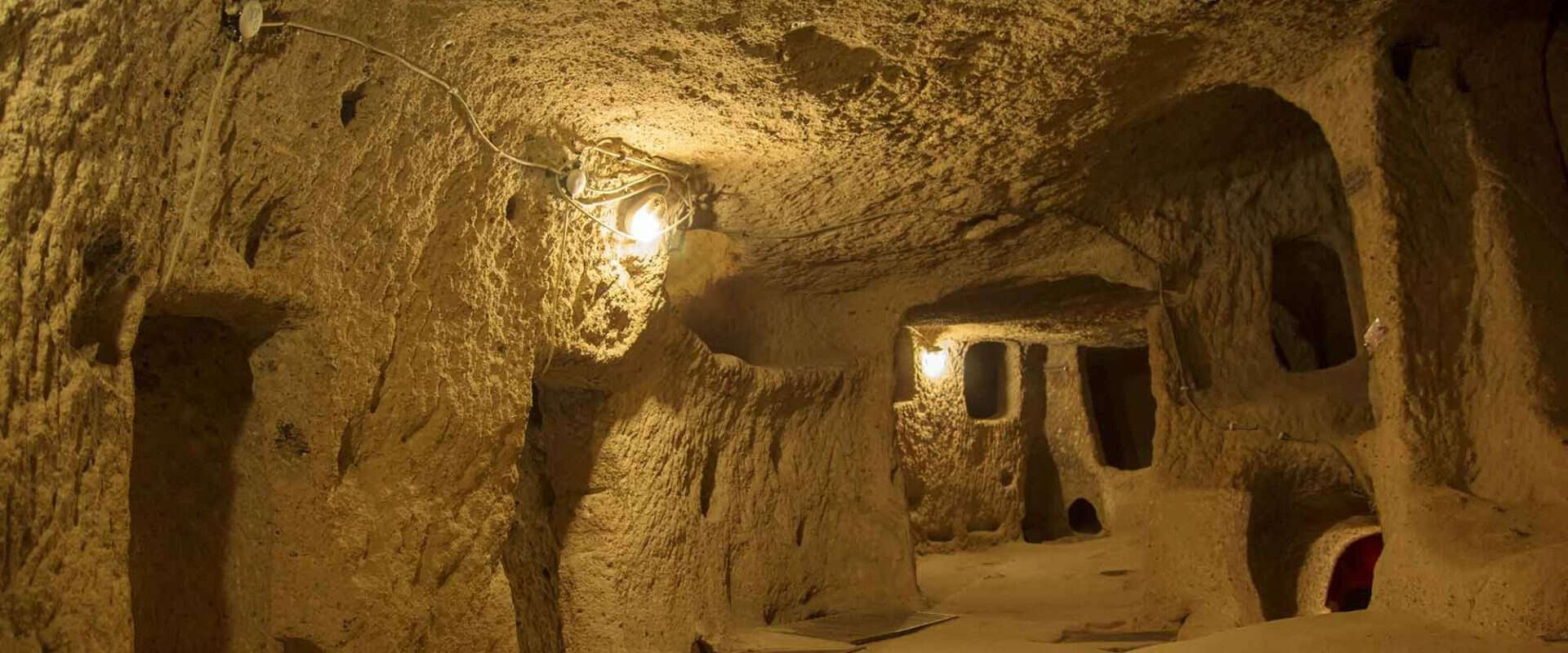
Nestled in the heart of Turkey’s otherworldly Cappadocia region, Kaymakli Underground City stands as one of humanity’s most astonishing architectural achievements. Carved into soft volcanic rock over millennia, this labyrinthine complex offers a glimpse into ancient ingenuity and survival. With its interconnected tunnels, chambers, and ingenious systems, Kaymakli is not just a historical site—it’s a testament to resilience and communal living.
Historical Background
Early Origins and Construction
Kaymakli’s origins trace back to the Hittite era (circa 1200 BCE), when early inhabitants began excavating the region’s malleable tuff rock. However, the city flourished under Phrygian and Persian rule, evolving into a refuge during invasions. By the Roman and Byzantine periods (4th–11th centuries CE), early Christians expanded Kaymakli into a sprawling sanctuary to evade persecution.
Byzantine Era and Christian Refuge
During the 7th–11th centuries, Arab incursions forced Cappadocia’s Christian communities underground. Kaymakli became a fortified haven, housing thousands alongside livestock and supplies. Its strategic location along trade routes allowed residents to emerge and rebuild after threats subsided, preserving their faith and culture.
Architectural Marvels of Kaymakli
Layout and Structure
Kaymakli spans eight levels, though only four are accessible today. Each level served distinct purposes:
-
Level 1: Stables for livestock.
-
Level 2: A church, communal kitchens, and living quarters.
-
Levels 3–4: Storage rooms, wineries, and olive presses.
-
Lower levels: Additional storage, defense posts, and escape routes.
Narrow, winding tunnels (some only 40 cm wide) connected chambers, forcing invaders into single-file lines while residents retreated deeper.
Ventilation and Water Systems
A network of 52 ventilation shafts provided fresh air and doubled as wells, reaching depths of 80 meters. These shafts regulated temperature and humidity, sustaining life during prolonged sieges.
Defense Mechanisms
Massive round stone doors (1.5 meters in diameter) sealed critical passages. Movable millstones could block tunnels entirely, while hidden escape routes offered last-resort exits.
Daily Life in the Underground City
Living Quarters and Communal Spaces
Families occupied small, rock-cut rooms with niches for oil lamps. Communal areas included kitchens with hearths, wineries for fermenting grapes, and storage rooms stocked with grains, oil, and wine. Animal stables on the first floor provided warmth and resources.
Religious and Cultural Practices
A centrally located church on the second level featured a nave, baptismal font, and living quarters for clergy. Fresco fragments suggest vibrant religious life, while communal spaces fostered social cohesion during crises.
Cultural and Historical Significance
Kaymakli symbolizes humanity’s adaptability and the enduring spirit of early Christians. Its design influenced neighboring underground cities like Derinkuyu (10 km away), part of a network of over 200 subterranean complexes in Cappadocia. Recognized as a UNESCO World Heritage Site since 1985, Kaymakli preserves a unique chapter in Anatolian history.
Tourism and Visitor Experience
What to Expect When Visiting
Open since 1964, Kaymakli welcomes explorers to its dimly lit tunnels and chambers. Highlights include:
-
The church complex with its carved crosses.
-
Wine production areas featuring grape presses.
-
Ingenious ventilation shafts and defense systems.
Tips for Visitors
-
Wear sturdy shoes and comfortable clothing for navigating uneven terrain.
-
Hire a guide to decode the city’s history.
-
Those with claustrophobia should proceed cautiously.
Nearby Attractions in Cappadocia
-
Göreme Open-Air Museum: Rock-cut churches with Byzantine frescoes.
-
Uchisar Castle: A panoramic viewpoint carved into a volcanic peak.
-
Ihlara Valley: A 14-km canyon with hidden chapels.
Preservation and Conservation Efforts
Kaymakli’s soft tuff rock faces threats from erosion, humidity, and tourism. Conservation initiatives by the Turkish government and UNESCO focus on:
-
Reinforcing unstable sections with steel supports.
-
Limiting visitor numbers in sensitive areas.
-
Monitoring environmental impacts.
Conclusion
Kaymakli Underground City is more than an archaeological wonder—it’s a portal to a time when survival hinged on collective ingenuity. As you wander its shadowy corridors, imagine the lives shaped by faith, fear, and resilience. For modern travelers, Kaymakli offers not just a journey underground, but a profound connection to our shared human heritage.
Plan Your Visit
-
Location: 20 km south of Nevşehir, Cappadocia, Turkey.
-
Hours: 8 AM–7 PM (April–October); 8 AM–5 PM (November–March).
