

A friend of mine, on hearing I was writing about Cappadocia, asked a question that stopped me for a moment: “Remind me what that actually is?” I realised, trying to answer her, that I’d spent so long deep in the specifics (which valley, which underground city, which room has the better jacuzzi) that I’d never actually stepped back and explained the place from scratch, for someone who’s heard the name and pictured, vaguely, some balloons. So here, for her and anyone else starting from zero, is the actual case for Cappadocia, and the honest answer to whether it’s worth the trip.
What is Cappadocia actually famous for?
Three things, roughly, and they compound each other rather nicely.
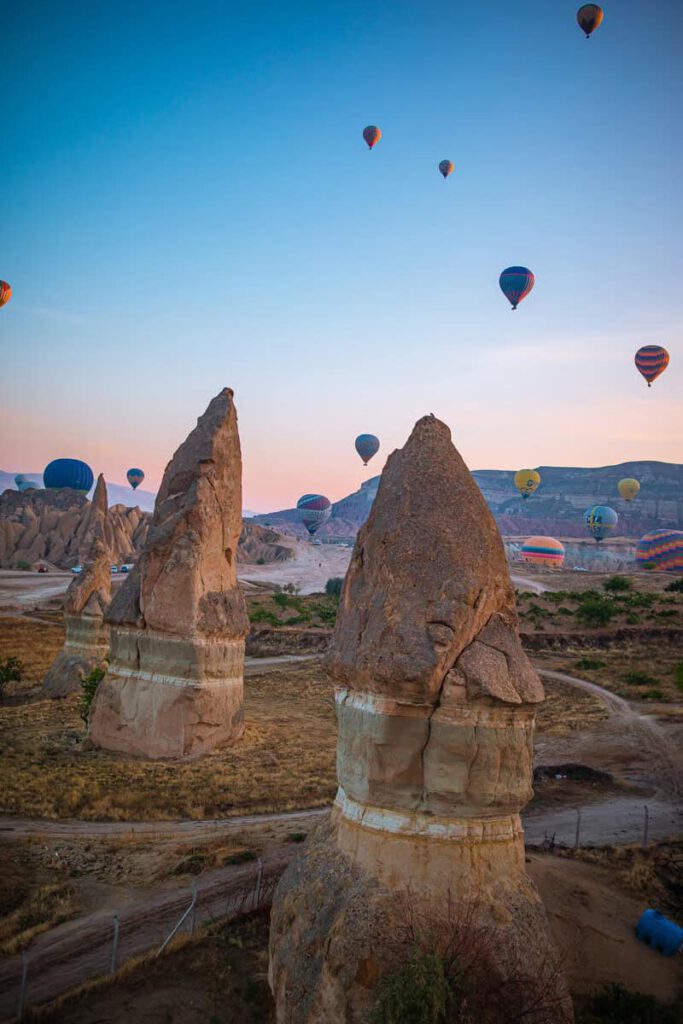
First, the landscape itself: millions of years of volcanic ash settling into soft rock, then carved by wind and water into “fairy chimneys”: tall, cone-shaped spires, some capped with a harder rock that makes them look faintly like giant mushrooms, spread across valleys that genuinely don’t resemble anywhere else I’ve stood.
Second, the underground cities, extraordinary multi-level settlements carved directly into that same soft rock by people who needed somewhere to hide from invading armies over a thousand years ago, some of them large enough to have sheltered thousands of people at once.
And third, the hot air balloons, which have become almost synonymous with the region: hundreds of them lifting off at dawn most mornings, drifting silently over the fairy chimneys, in a scene photographed so often it’s become one of the more recognisable travel images in the world, for reasons that turn out to be entirely justified once you’re standing underneath it.
Is it in Asia, or Europe?
A fair question, since Turkey itself famously straddles both continents.
Cappadocia, however, is unambiguously in Asia. It sits deep in central Anatolia, hundreds of kilometres from the narrow strip of Thrace on the European side, which is really just Istanbul and its immediate surroundings. If you’re picturing Cappadocia as some extension of Istanbul’s European half, recalibrate: it’s a proper journey into the Asian interior of the country, geographically and, in some ways, culturally too: a quieter, more rural Turkey than the one most first-time visitors meet in Istanbul.
So, is it actually worth it?
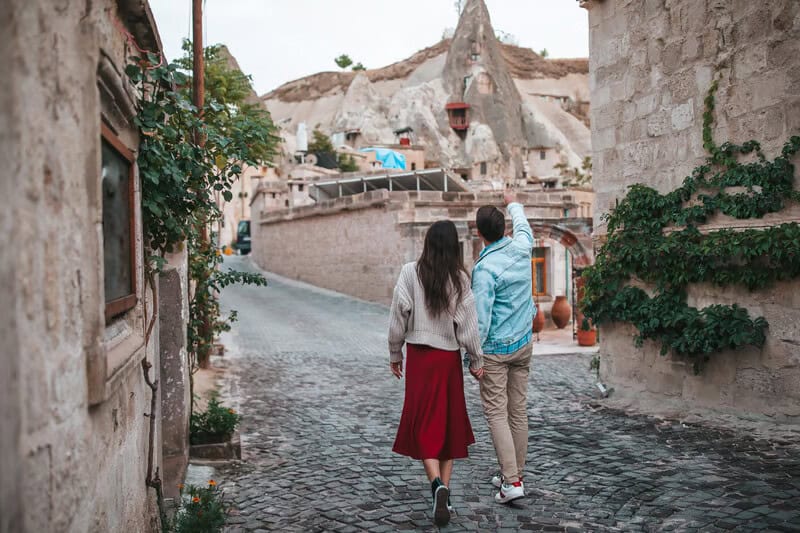
Yes, and I don’t say that lightly, because I’ve been disappointed enough by hyped destinations to have developed a healthy scepticism toward the phrase “worth it” in general. What tips Cappadocia over the line, for me, is that it doesn’t rely on a single headline attraction the way some famous destinations do. You could skip the balloon flight entirely and still leave having had a remarkable trip, just from walking the valleys and standing inside a thousand-year-old underground city.
You could skip the underground cities and still leave satisfied, just from a single sunrise balloon flight. The landscape does the heavy lifting even before you add a single organised activity to it, and very few places I’ve visited manage that particular trick.
Is it expensive?
Less than you’d assume, and considerably less than a destination with this much visual drama has any right to cost.
Accommodation ranges from proper budget guesthouses up through cave hotels like this one into genuine luxury, food is inexpensive by most Western European standards, and the one unavoidable splurge, the balloon flight, is a cost most visitors happily accept rather than resent. We’ve broken the real numbers down properly in our daily budget guide, but the short version is: this is not a destination that punishes a modest budget the way some famous places do.
A short digression on managed expectations
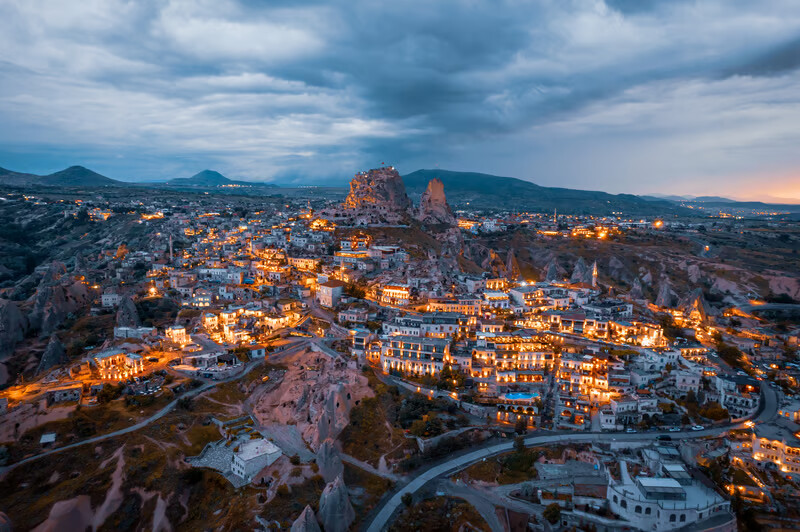
I want to flag one honest caveat, because I think travel writing does readers a disservice when it only ever says yes. If your entire trip is built around a single perfect Instagram photo of one specific balloon at one specific angle (the kind you’ve seen shared a thousand times), you may find the reality involves rather more other balloons, other tourists with the same photo in mind, and considerably more logistics than the photo suggests.
Go for the actual experience of the place, rather than one manufactured image of it, and Cappadocia delivers completely. Go purely chasing that one photograph, and you may find the crowd of other people chasing the same shot slightly dents the magic.
The landscape, thankfully, is large enough and strange enough in every direction that it’s easy to simply walk a little further from the crowd and find your own version of it.
Where to start
If this has convinced you, our full Cappadocia travel guide pulls together everything else on this site worth reading: itineraries, where to stay, what things actually cost, and how to get here. You can check current rates for a room at Arte Cave Hotel on our booking page whenever you’re ready to stop reading about the place and go stand in it.
Related reading: How many days you actually need in Cappadocia · What it actually costs to visit Cappadocia.
Bu sayfayı Türkçe okuyun · Leer esta página en español
Written by the team at Arte Cave Hotel, hoteliers based in Ürgüp, Cappadocia, drawing on firsthand local experience.


