

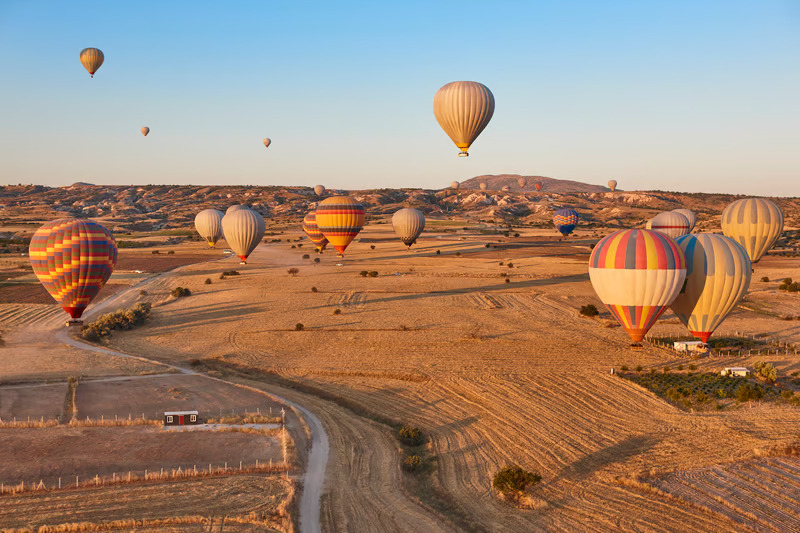
I have now been up in a hot air balloon over Cappadocia more than once, and I still cannot adequately explain to people who haven’t done it why a large fabric bag full of hot air, hanging beneath a wicker basket, is one of the more profound travel experiences a person can have. I’ve tried. I usually end up gesturing vaguely and saying “you just have to see it,” which is the sort of thing said by people who have run out of better words, and in this case I think I genuinely have. So instead of trying to describe the feeling again, let me answer the practical questions properly, because those at least have real answers.
How Much Does It Actually Cost?
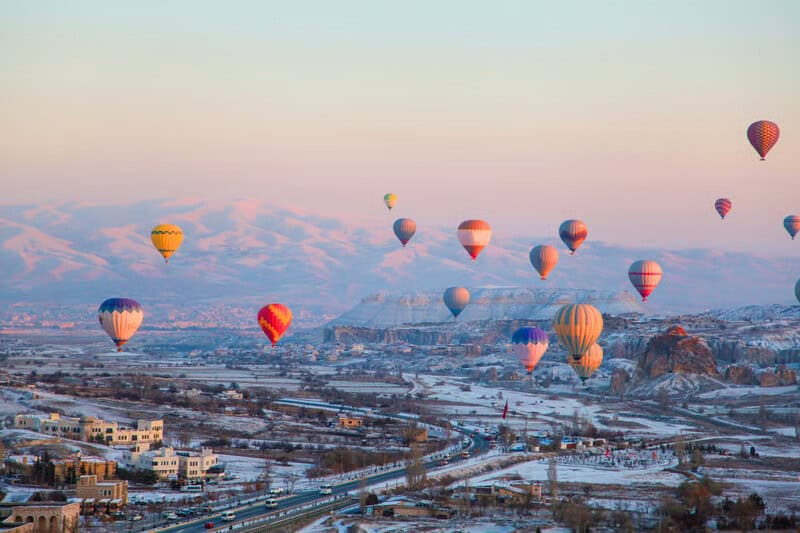
Prices vary more than you’d expect, mostly according to flight tier rather than season. Standard flights, which is what most visitors book and what I’d recommend for a first flight, generally run somewhere between €130 and €150 per person.
Deluxe flights, with smaller passenger groups and a bit more attention, run €180–€220. VIP flights, smaller still, can run €300–€400. And if you want the basket entirely to yourself and whoever you brought with you, private balloons run anywhere from €800 up past €1,200. Occasional low-season promotions can bring the entry-level price down considerably. I’ve seen standard flights advertised as low as €70 during quieter months, so it’s worth checking current rates for your specific dates rather than assuming a fixed number. Whichever tier you choose, most operators build in the hotel transfer, a light breakfast or snack beforehand, and a small celebratory toast after landing, which is a nice touch even if the “champagne” is, at that hour, doing more emotional work than actual work.
Are They Actually Safe?
This is the question I get asked most, usually by someone eyeing the basket with the same expression my mother gives any activity involving both altitude and open flame.
The honest answer: Cappadocia has one of the better safety records for commercial ballooning anywhere in the world. Every operator is regulated by Turkey’s Civil Aviation Authority (SHGM), only licensed companies with certified pilots are permitted to fly, and the decision to fly or ground the fleet on any given morning is made independently by pilots based on wind and weather conditions, not by a company reluctant to refund a fully booked flight.
If conditions aren’t right, flights are simply cancelled, and every licensed operator I’ve come across offers free rescheduling or a full refund if you’re leaving too soon to try again. My one piece of practical advice: book with a properly licensed, SHGM-certified operator rather than the cheapest unlicensed option you find, which is exactly the kind of place I’d want your hotel’s help identifying rather than gambling on a stranger’s online review.
How High Do They Actually Fly?
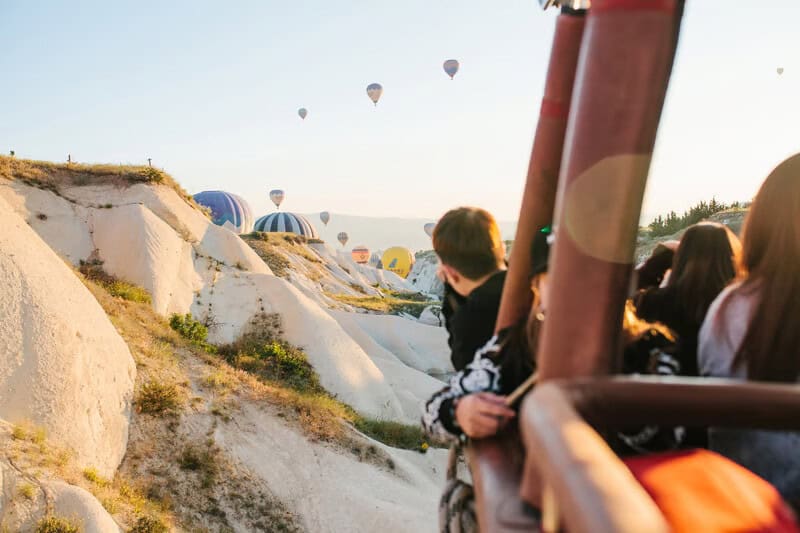
It varies by the day, the wind, and the pilot’s judgment, but flights commonly reach somewhere in the range of 300 to 1,000 metres above the valley floor, depending on conditions. What surprises most first-timers isn’t the number itself but how the altitude actually feels.
There’s a stretch, low over the valley, where you skim close enough to the fairy chimneys to feel like you could reach out and touch one, and then a later stretch, much higher, where the entire region opens up beneath you at once and the whole sense of scale resets completely. Both parts of the flight feel entirely different, and neither, in my experience, feels remotely as alarming as the number on paper might suggest.
Is It Actually Worth The Money?
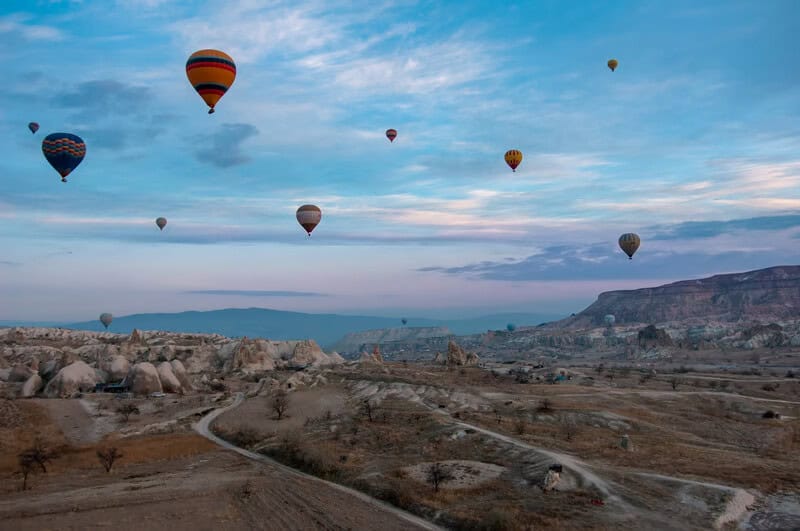
Yes, and I say that as someone who is, by nature, deeply suspicious of any activity marketed as “unforgettable” or “once in a lifetime,” phrases which have been so overused by travel marketing that they’ve stopped meaning anything.
This is one of the rare cases where the hype turns out to be roughly accurate. The specific combination of near-total silence (no engine, just the occasional roar of the burner), the fairy chimneys underneath, and dozens of other balloons rising alongside yours in the same soft morning light, isn’t something I’ve found a comparable substitute for anywhere else I’ve traveled. It is, admittedly, an expense on top of an already-planned trip. I’d still budget for it before I’d budget for almost anything else on the itinerary.
A Brief Digression On The Pre-Dawn Wake-Up
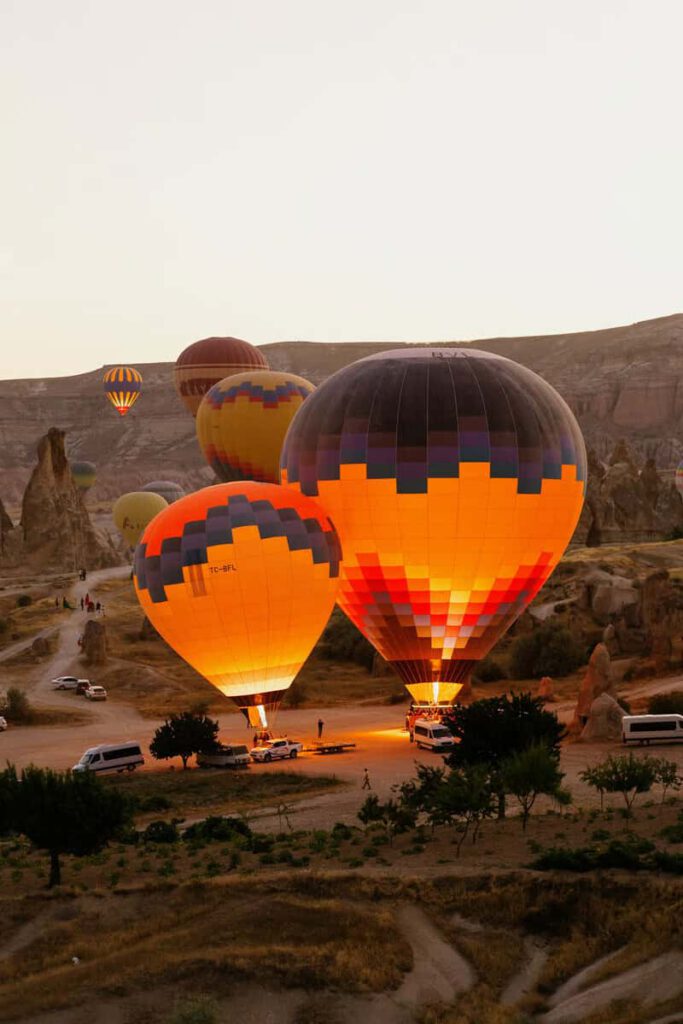
Nobody warns you properly about the wake-up time, which typically falls somewhere before 5 a.m., in the dark, with a small cup of tea pressed into your hand by someone considerably more cheerful about the hour than you have any right to expect a human being to be. Children under six and pregnant travelers aren’t permitted to fly, which is sensible and also, if you’re the parent left behind with a sleeping child at the hotel, occasionally a source of quiet resentment toward your co-parent who gets to go. For everyone else: set two alarms, lay your clothes out the night before like a schoolchild the night before an exam, and trust that the misery of the wake-up will be entirely forgotten within about ninety seconds of leaving the ground.
Booking Your Flight
We arrange balloon bookings directly through the hotel, handle the timing so you’re not relying on your own alarm clock at that hour, and can point you toward properly licensed operators rather than leaving you to compare eleven identical-looking companies online at midnight. If you’d like to combine your flight with a stay, current room rates are on our booking page, and our room guide can help you pick the right one for the trip.
Related reading: Do you need a hotel near the balloon launch sites? · What it actually costs to visit Cappadocia.
Bu sayfayı Türkçe okuyun · Leer esta página en español
Written by the team at Arte Cave Hotel, hoteliers based in Ürgüp, Cappadocia, drawing on firsthand local experience.


