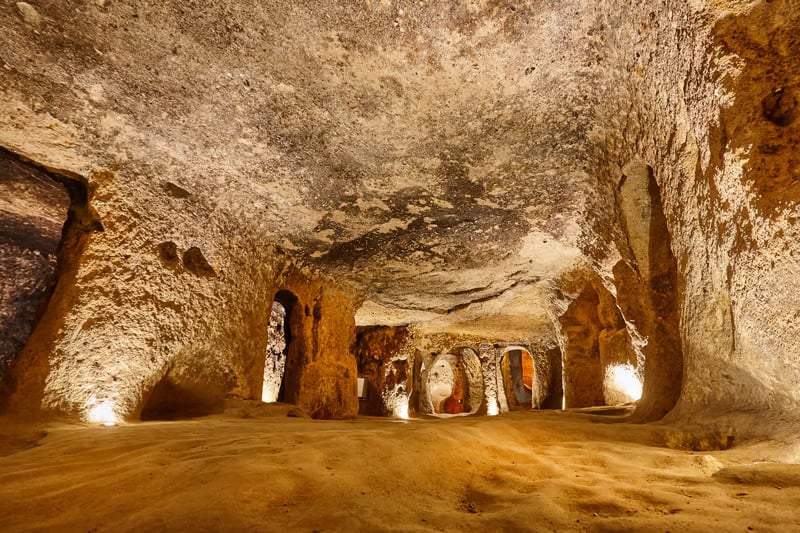

Somewhere in Kaymaklı, on a stretch of tunnel narrow enough that I had to turn my shoulders sideways to get through it, I had the thought that has apparently occurred to every single visitor to Cappadocia’s underground cities before me: how did anyone live down here. Then, a day later, in Derinkuyu, considerably deeper and considerably narrower in places, I had the same thought again with rather more feeling.
If you’re trying to decide between the two (and most visitors, sensibly, don’t have time or patience for both), let me actually compare them properly, rather than just telling you they’re both “amazing,” which is true and also unhelpful.
The Basic Numbers
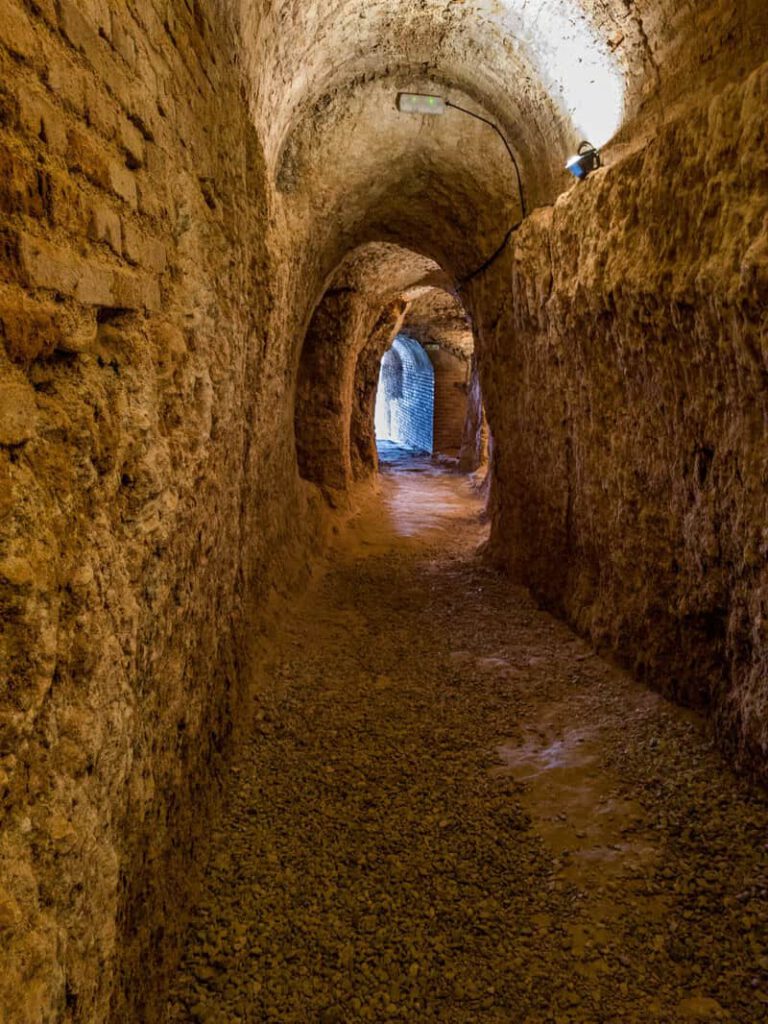
Kaymaklı descends around 40 metres across eight total levels, four of which are open to visitors, and could shelter somewhere between 3,000 and 5,000 people, along with their livestock, during the periods it was in active use as a refuge.
Derinkuyu is the more extreme of the two in almost every respect: it plunges 85 metres (more than double the depth) across eighteen total levels, with eight open to the public, and had the capacity to shelter a genuinely staggering 20,000 people. The two sites were, as it happens, connected by a tunnel system running some eight to nine kilometres between them, part of a much larger network of underground settlements scattered across the region, which is either an impressive feat of ancient engineering or a slightly alarming thought depending on how you feel about tunnels generally.
How They Actually Feel To Walk Through
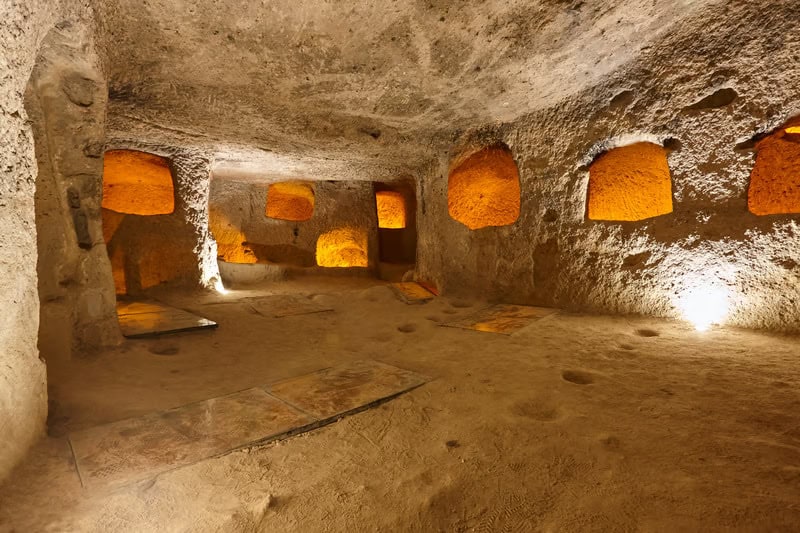
This is where the real difference between them shows up, and it’s less about the numbers than the shape.
Kaymaklı is wider than it is deep: more horizontal movement between rooms on each level, wider tunnels, larger chambers. That makes it noticeably easier to navigate and considerably friendlier to anyone with even a mild concern about tight spaces.
Derinkuyu is built the opposite way: a long, steep descent, with levels stacked tightly on top of each other, and several stretches where you’ll find yourself properly crouching rather than merely stooping. If claustrophobia is a real concern rather than a mild inconvenience, Kaymaklı is the more forgiving choice by a clear margin. If you want the fuller, more dramatic sense of just how deep and extensive these places actually got, Derinkuyu delivers that more viscerally, at the cost of a more physically demanding visit.
What You’ll Actually See In Each
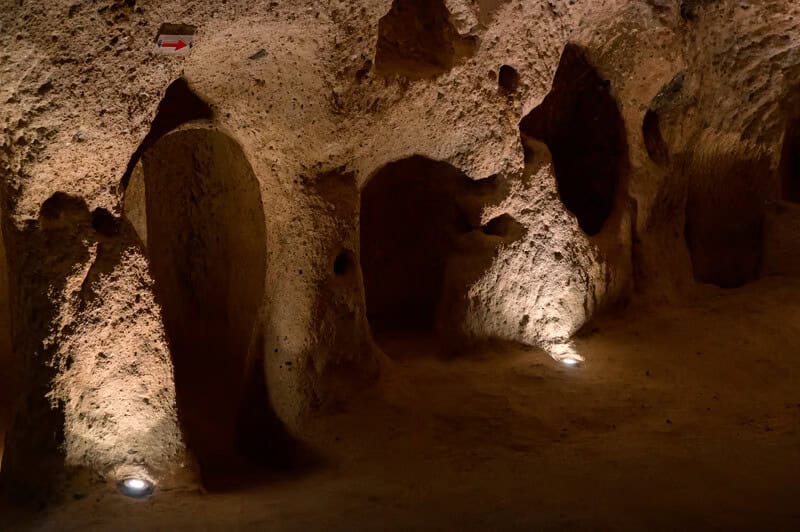
Both sites show you the same general categories of space: stables near the entrance where animals were kept, communal kitchens and wine-pressing rooms, storage chambers for grain and supplies, small churches with carved crosses, and the ingenious ventilation shafts that kept air circulating and doubled as wells, some running the full depth of the settlement. Derinkuyu’s greater depth means a more elaborate version of all of this: more levels of storage, a larger church, a more extensive sense of a genuine underground town rather than a shelter. Kaymaklı’s more compact, horizontal layout means you see a similar range of spaces in a shorter, less strenuous visit, which for a lot of travelers balancing an already packed day is the more practical choice.
A Brief Digression On Why Any Of This Exists At All
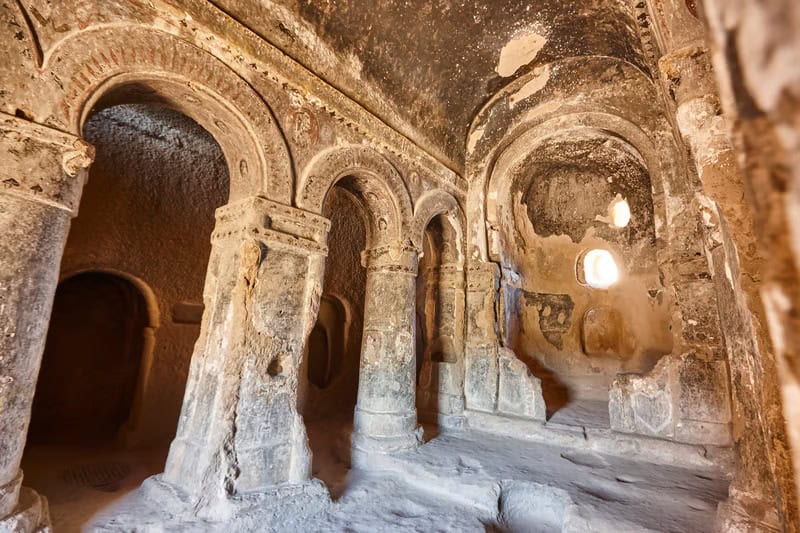
It’s worth pausing on the sheer scale of the original problem these places were built to solve. Early Christian communities in the region, facing repeated raids over the centuries, didn’t just dig a hiding spot. They built entire functioning settlements underground, with the infrastructure to shelter thousands of people and their animals for extended periods, complete with systems to seal off sections using massive rolling stone doors that could be moved from the inside. I find it strangely moving, standing in one of these chambers, to think about the specific combination of fear and resourcefulness that produced something this elaborate. It is, I think, one of the more underrated feats of human ingenuity that most people have vaguely heard of and never quite grasped the scale of until they’re standing in it themselves.
So Which Should You Actually Visit?
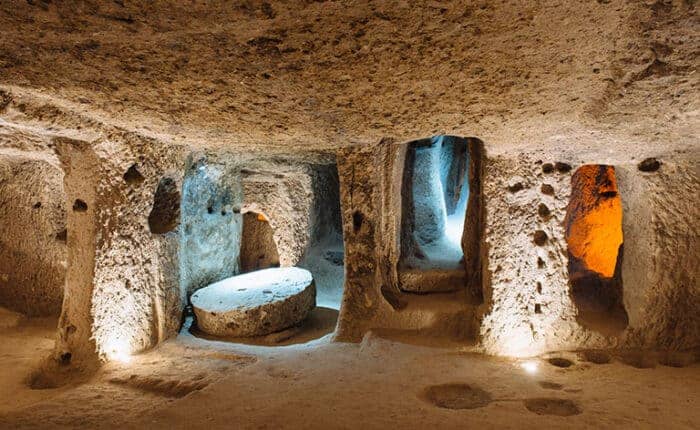
If you only have time for one: choose Kaymaklı if you want an easier, more comfortable visit, or if you’re at all uneasy about tight spaces. Choose Derinkuyu if you want the fuller, more dramatic sense of scale and don’t mind some genuine crouching to get it.
If your schedule allows both (and on a longer trip, I’d genuinely recommend it), the two complement each other well enough that seeing one doesn’t make the other feel repetitive; if anything, having done both, I found each made me appreciate the other’s particular design choices more, in the way visiting two very different houses built by two very different architects sharpens your sense of both.
You can read more about Kaymaklı specifically in our dedicated guide, and for the rest of your trip planning, our full Cappadocia travel guide covers everything else. Current room rates at Arte Cave Hotel are always available on the booking page.
Related reading: 14 days in Cappadocia: the unhurried itinerary · 10 unforgettable experiences in Cappadocia.
Bu sayfayı Türkçe okuyun · Leer esta página en español
Written by the team at Arte Cave Hotel, hoteliers based in Ürgüp, Cappadocia, drawing on firsthand local experience.

